Under review · ML4PS 2026Mentored project
K. Pendiyala*, H. Zia*, T. Lee*, T. Legge, A. J. De Leon, Z. Zhao, A. Wang, A. Gandrakota, J. Ngadiuba, R. Cavanaugh, J. Duarte
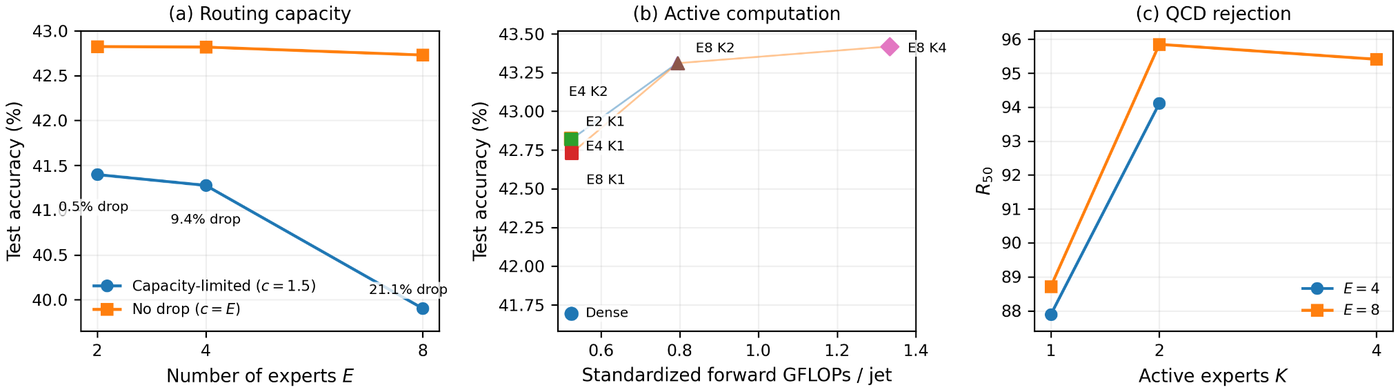
Sparse MoE vs. dense transformers on 188-class JetClass-II. No-drop top-1 MoE gains ~1 pp at nearly unchanged FLOPs; more stored experts add little, and routing structure does not track accuracy.
Under review · PRX IntelligenceCo-first author
A. Wang*, Z. Zhao*, S. Katel, V. G. Sahu, E. E. Khoda, A. Gandrakota, J. Ngadiuba, R. Cavanaugh, J. Duarte
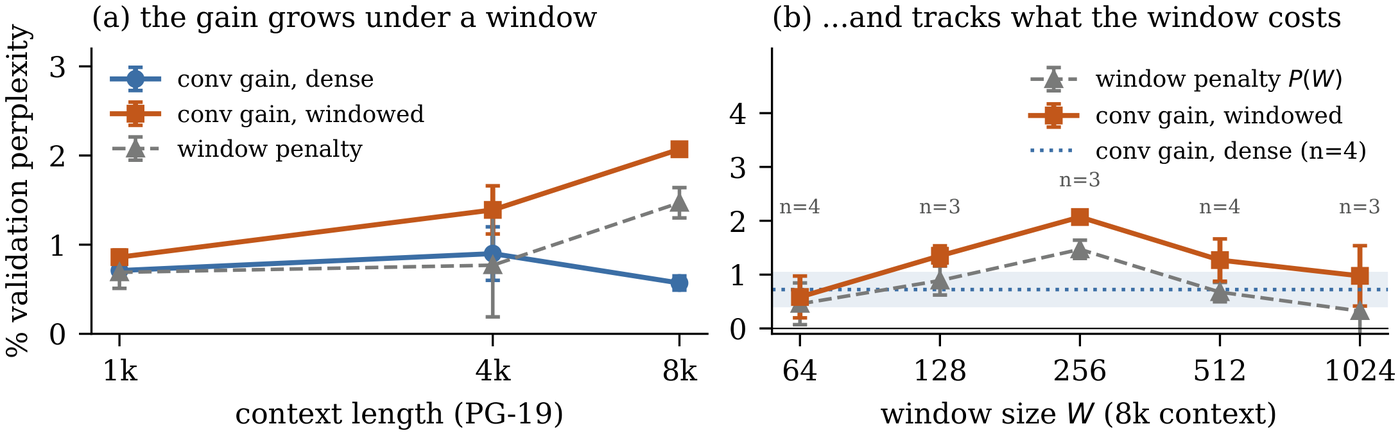
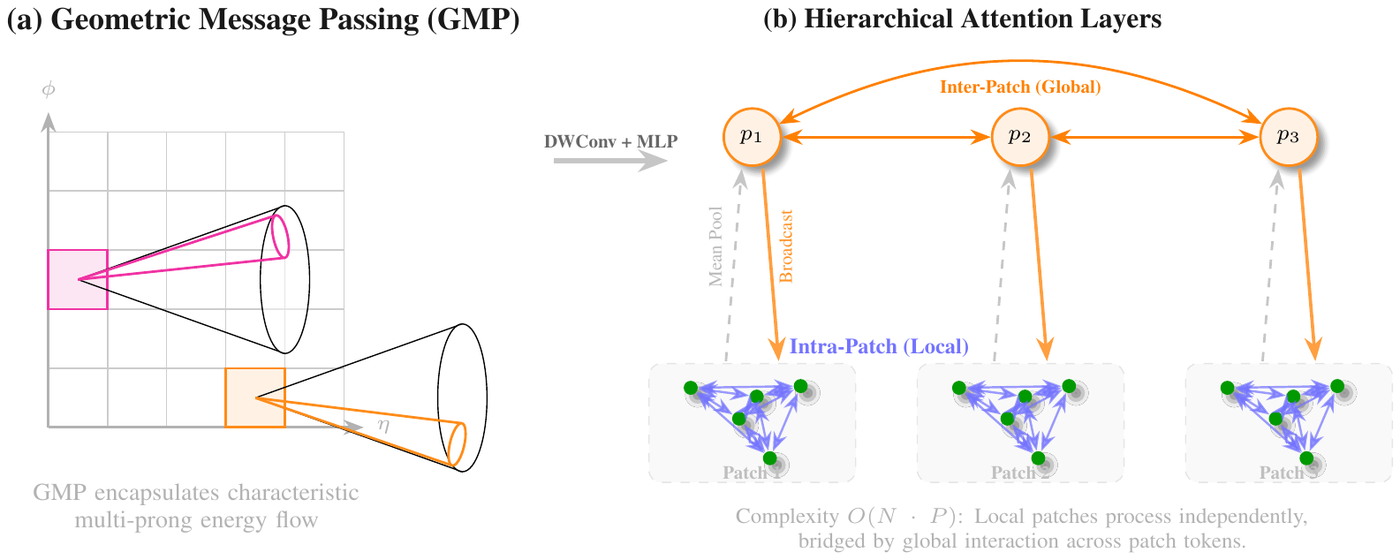
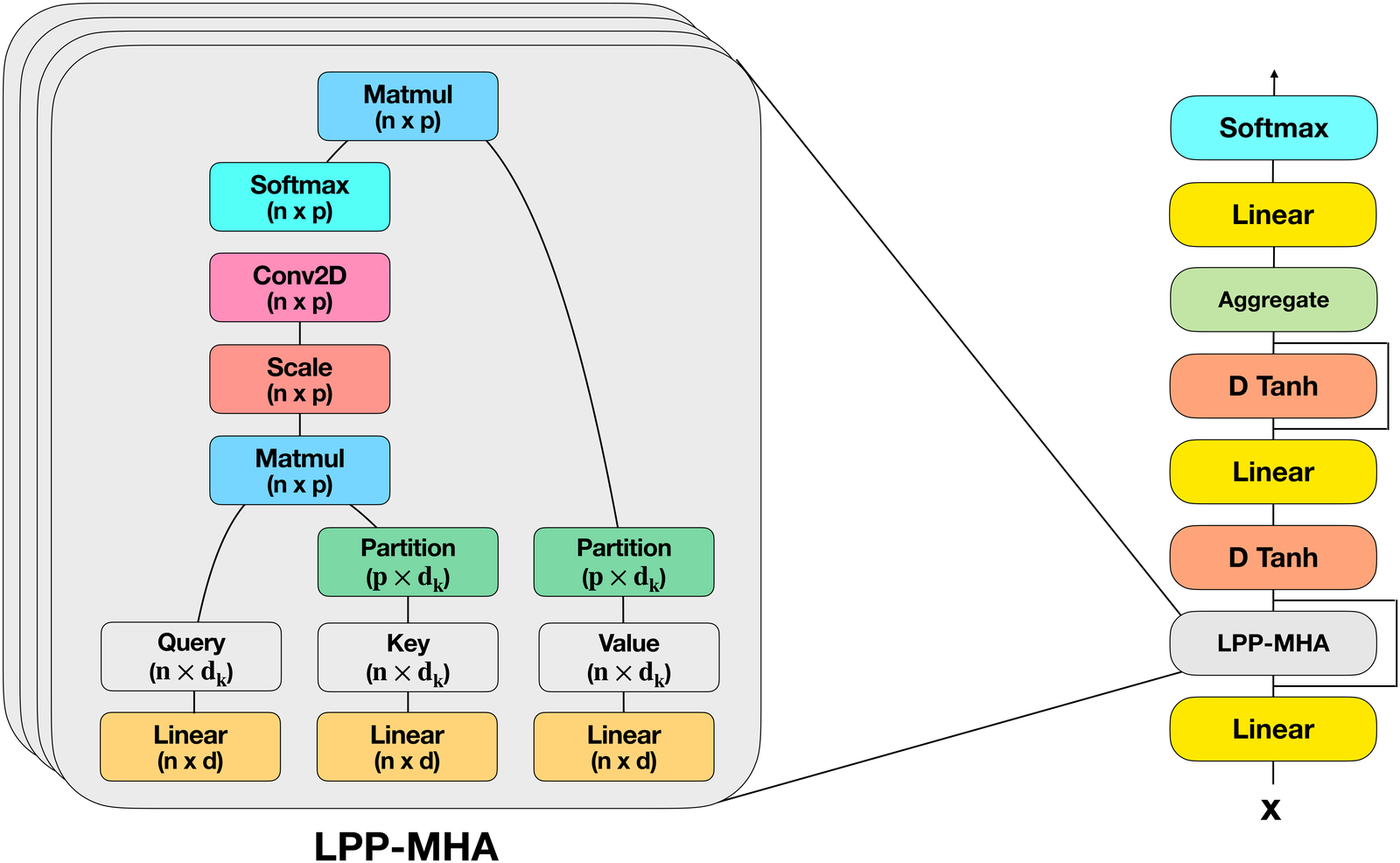
Linear attention with locality-preserving token ordering, partitioned key/value projections, and depthwise convolution over attention maps. Matches full-attention accuracy with lower FLOPs and latency.
ACAT 2024First author
Z. Zhao, F. Mokhtar, R. Kansal, H. Li, J. Duarte
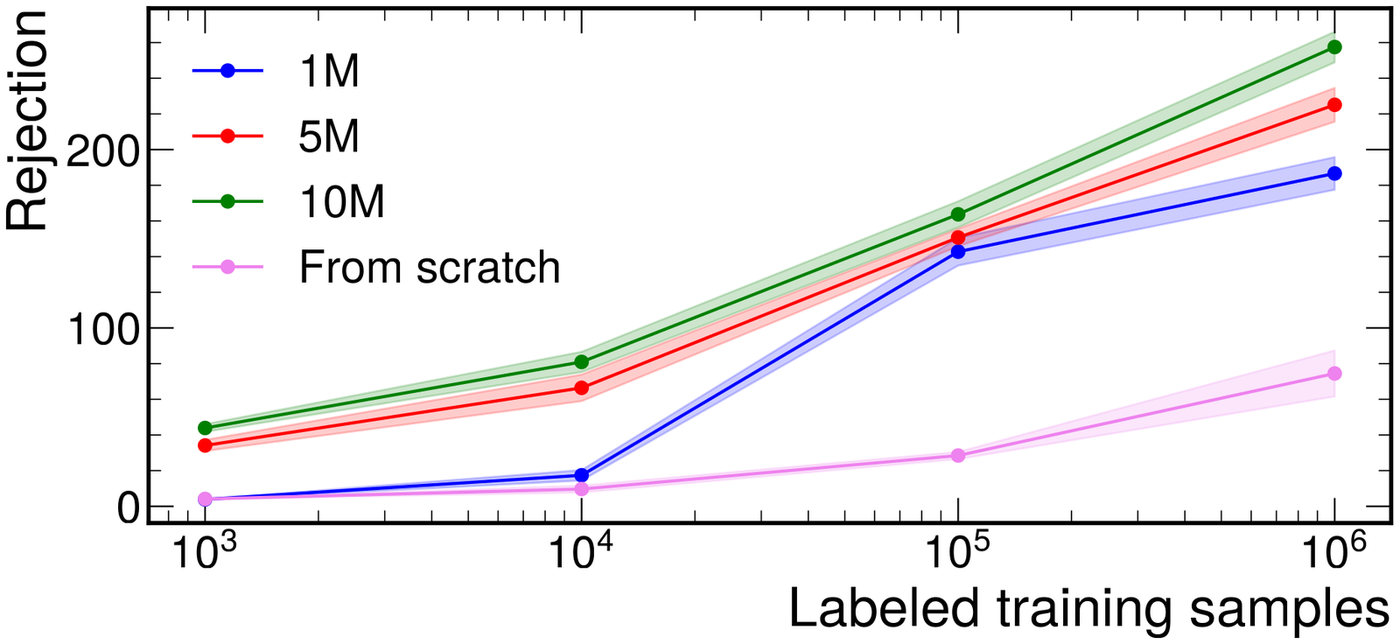
How pretraining data scale shapes downstream performance after finetuning, with throughput gains from fewer CPU–GPU syncs, better matmul kernel utilization, and mixed precision.
DL4C @ NeurIPS 2025
P. Chen, N. Yan, Z. Zhao, Y. Lin, H. Chen, Y. Hu, Q. Bai, X. Li, M. S. Mortazavi
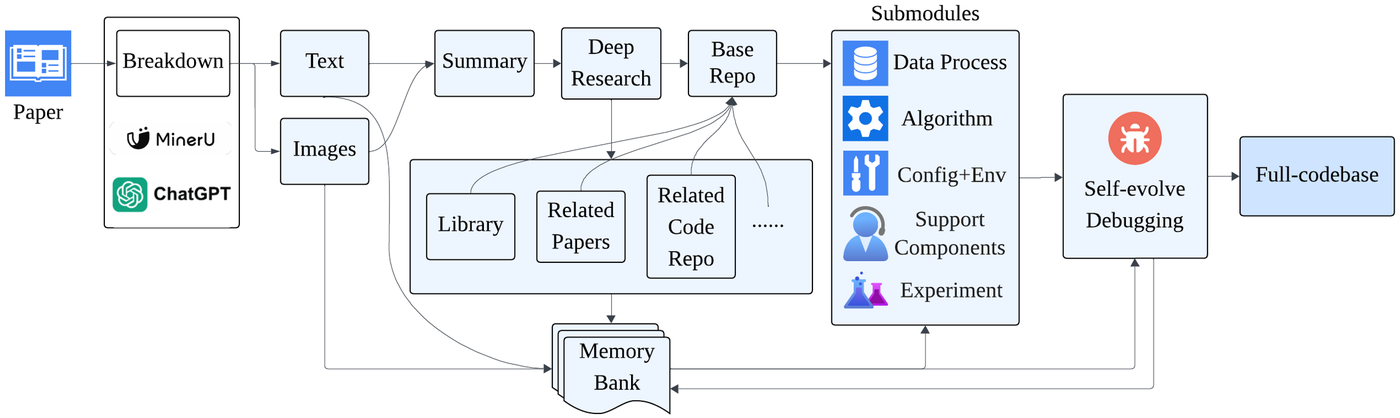
A multi-agent LLM system that turns research papers into working codebases, reaching a 63.2% replication score on PaperBench. I designed its self-evolving debugging loop: locate, patch, execute, test.
ML4PS @ NeurIPS 2025
T. Legge, A. Wang, J. Ortiz, V. Limouzi, Z. Zhao, A. Gandrakota, E. E. Khoda, J. Ngadiuba, J. Duarte, R. Cavanaugh
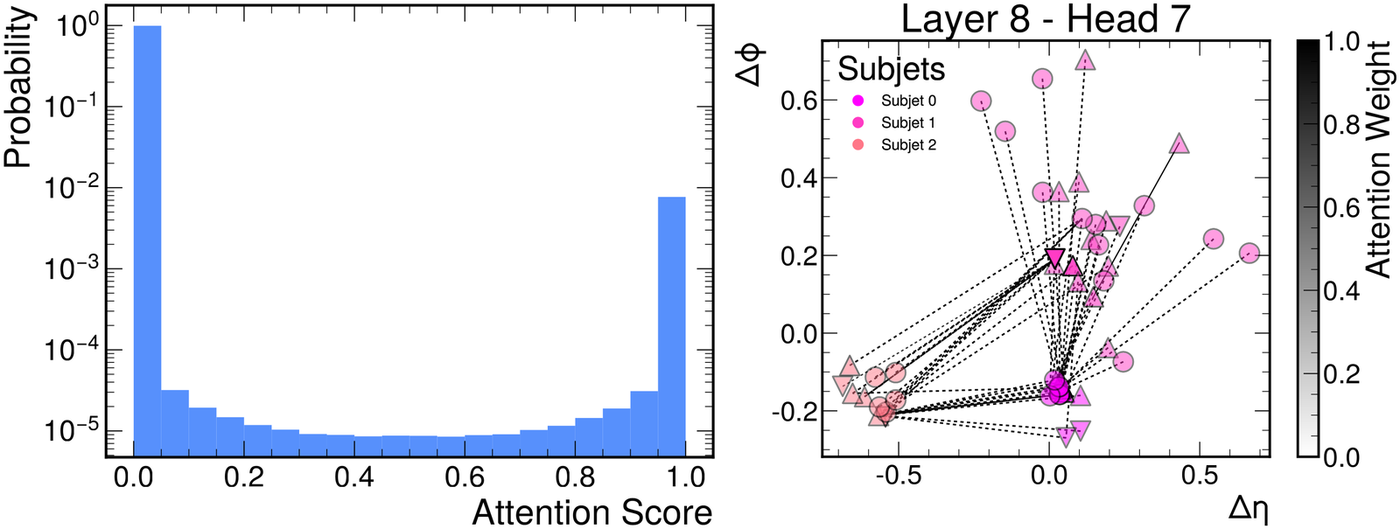
Near-binary attention in ParT comes mainly from the attention mechanism itself, not the physics-inspired interaction matrix, and it singles out key jet substructure.
ML4PS @ NeurIPS 2024Co-first author
S. Katel*, H. Li*, Z. Zhao*, R. Kansal, F. Mokhtar, J. Duarte
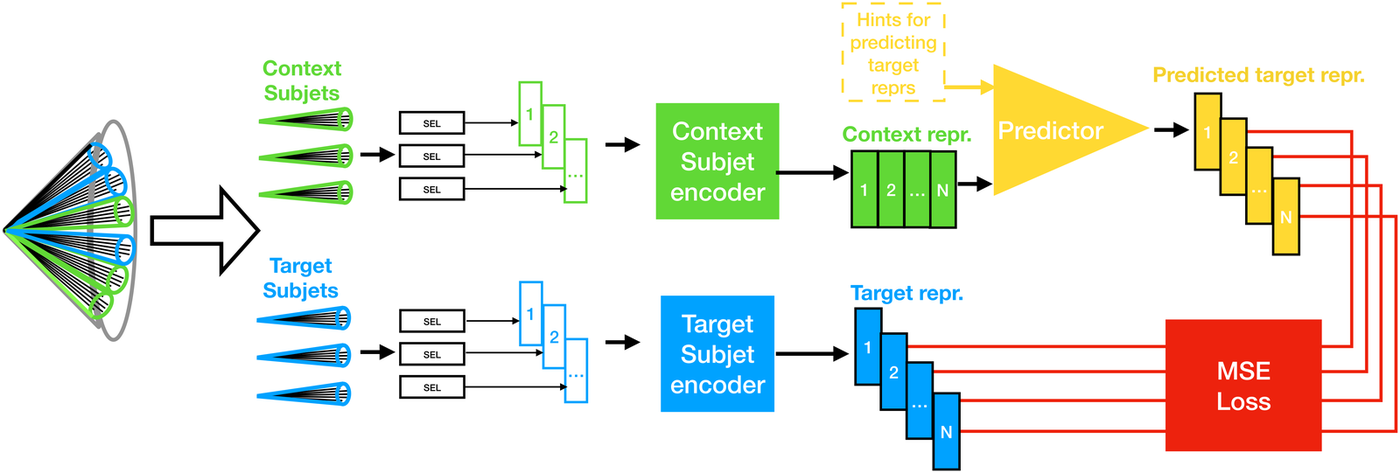
Self-supervised pretraining for set-structured inputs without hand-crafted augmentations, using redesigned masking and ordered positional encodings.
Under review · ML4PS 2026Mentored project
Information-Loss Audits of Learned Representations Depend on the Task Generator
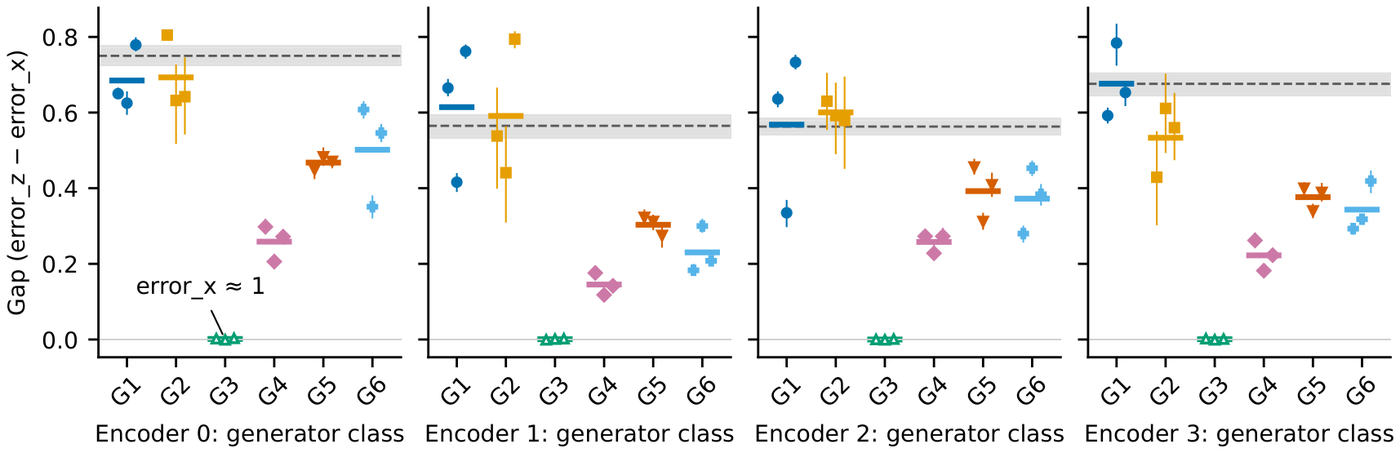
Audits of what a representation discards mostly reflect the task-generator class, not the representation. Reporting a witness set recovers a planted factor on 3/4 encoders where the top witness misses it.
PAI 2026 · StanfordMentored project
A. Bhat, R. Ide, Z. Zhao
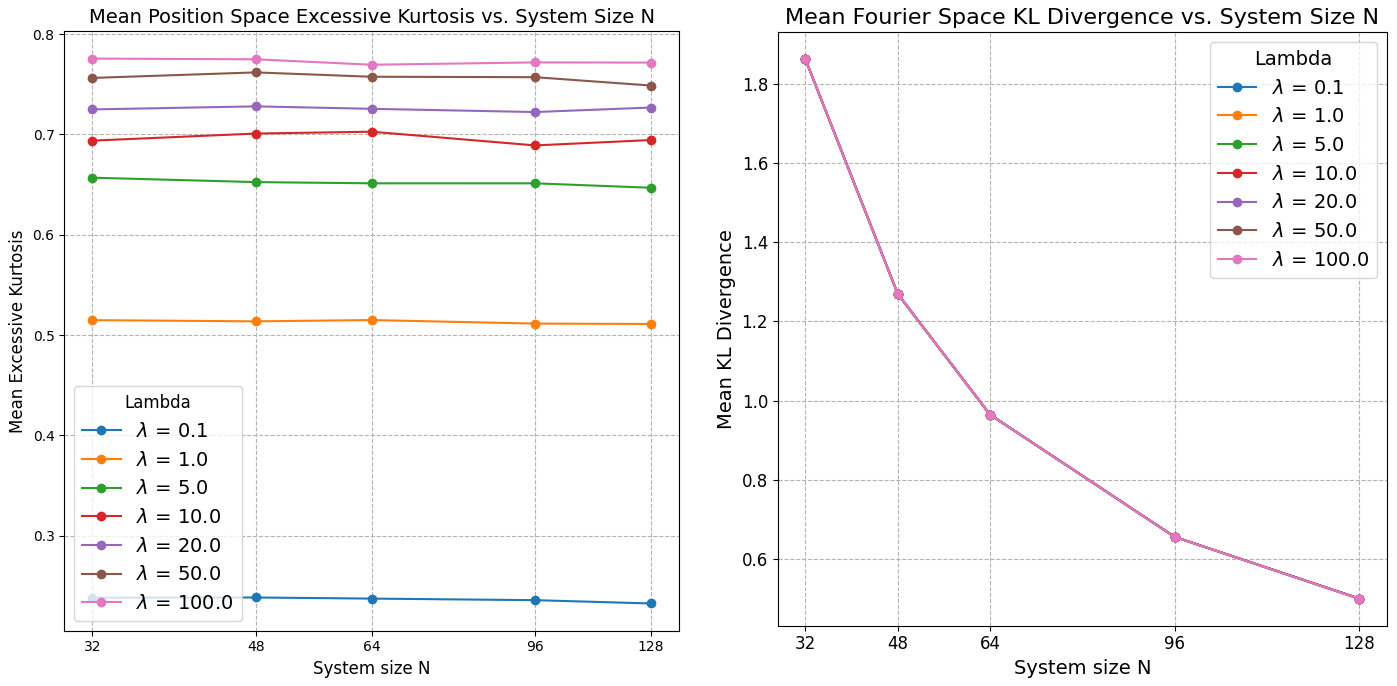
Gaussian, independent-mode models fail from structured inter-mode dependencies rather than marginal non-Gaussianity, giving a simple test for when richer generative models are needed.